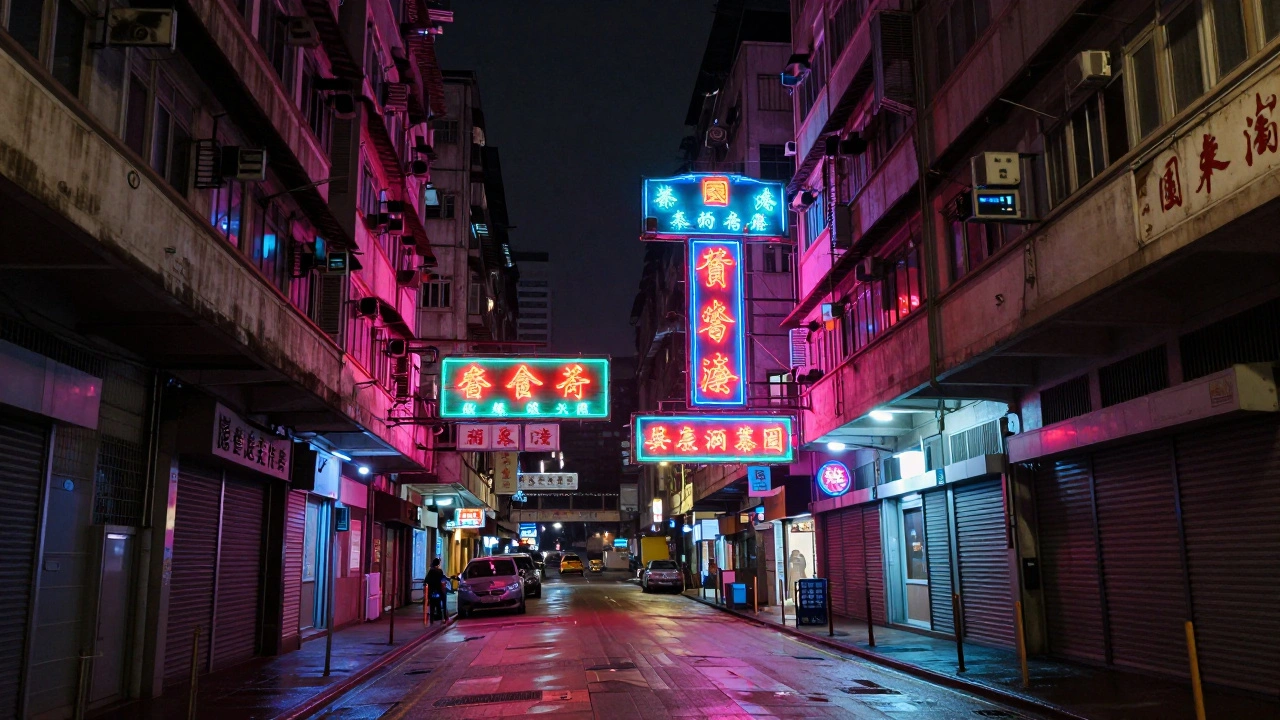
Walking through the neon-lit corridors of Mong Kok, you might see an ordinary apartment door. Behind it, however, lies a specific economic unit of Hong Kong's shadow economy. The one-woman brothel isn't just a social phenomenon; it's a sophisticated, though often invisible, real estate play. In a city where every square inch of land is fought over, these tiny residential flats serve as the primary infrastructure for a legal paradox: selling sex is allowed, but running a brothel is a crime.
The Legal Loophole and the 'One Woman One Room' Rule
To understand how these portfolios are structured, you first have to understand the law. Under Section 139 of the Crimes Ordinance, a law that prohibits the organization of sex work involving more than one person in a single establishment, the government draws a hard line. If two women work in one flat, it's a brothel-and the operator faces fines up to HK$20,000 or seven years in prison. If only one woman works there, she's technically an independent contractor.
This created a unique urban layout. Instead of large-scale houses of prostitution, the market fragmented into thousands of individual residential units. The "one woman one room" framework effectively turned the city's aging housing stock into a decentralized network of micro-businesses. While the law assumes these women are autonomous entrepreneurs, the reality is often more complex, with property managers and intermediaries quietly coordinating these units to maximize yield from a single building.
Real Estate Hubs: Mong Kok, Sham Shui Po, and Tin Hau
These operations don't just pop up anywhere. They cluster in neighborhoods where the building stock is old and the street life is chaotic. Mong Kok is the epicenter, where the dense concentration of neon signs and nightlife provides the perfect cover. Here, the real estate value isn't just in the bricks, but in the foot traffic and the existing "ecosystem" of the neighborhood.
In Sham Shui Po, you find a similar pattern of informal operations tucked into low-income residential blocks. More recently, Tin Hau has seen a surge. Workers are "invading" older buildings, transforming modest flats into private studios. For a landlord, these tenants are often attractive because they pay in cash and keep a low profile, provided the building's management looks the other way.
| District | Property Profile | Market Dynamic | Primary Appeal |
|---|---|---|---|
| Mong Kok | Mixed-use/Aging residential | High-density, fast-paced | Nightlife ecosystem & visibility |
| Sham Shui Po | Lower-end residential | Informal, low-cost | Affordable entry points |
| Tin Hau | Old building stock | Expanding/Emerging | Residential discretion |

The Decline of the Triad Portfolio
If you look back twenty years, the structure was different. Triads-Hong Kong's organized crime syndicates-effectively owned the market. They managed "portfolios" of women, acting as pimps and agents. They even had a rigorous vetting process called shi gong, where a representative would assess a woman's "quality" before she was brought into the network.
But the millennium brought a massive shift. By the early 2000s, the traditional triad-controlled model began to collapse. Why? Because the women got tech-savvy. The rise of the internet and encrypted chat apps allowed sex workers to bypass the middleman entirely. They stopped needing a syndicate to find clients or manage their "spot." Today, the hierarchical portfolio has been replaced by a decentralized, freelancer-led model. The triads lost one of their biggest revenue streams not to the police, but to the smartphone.
The Racialized Pricing Hierarchy
Even without a central syndicate controlling the prices, a rigid economic hierarchy persists. This isn't based on the services offered, but on the nationality of the worker. It's a remnant of colonial-era beauty standards that still dictate the "market value" of a flat's occupant.
- High Tier: Russian women command the highest prices, often more than double the rates of local workers. This is tied to a Western-centric perception of exotic beauty.
- Mid Tier: Hong Kong and Chinese nationals maintain a steady, mid-range market.
- Low Tier: Workers from Thailand and Malaysia typically face the lowest pricing structures, reflecting systemic economic disparities.
This racialized pricing means that the "value" of a specific apartment in a one-woman brothel portfolio is directly tied to who is occupying it. A flat in Tin Hau hosting a Russian worker is a significantly more profitable asset than the identical flat next door hosting a Thai worker.
The Gap Between Law and Operational Reality
The official line is that every woman is self-employed. The law says "one woman, one room." But if you talk to anyone in the industry, they'll tell you that's a fantasy. In the real world, there's often a hidden layer of coordination. This might be a landlord who rents out ten different units to ten different women, essentially running a distributed brothel while technically adhering to the letter of the law.
By keeping the workers separate in different rooms, the "portfolio manager" avoids the legal definition of a brothel. They aren't "organizing" sex work in one establishment; they are simply renting out multiple apartments to independent contractors. This shell game allows for the efficiency of a syndicate with the legal protection of a freelancer model.
Is selling sex illegal in Hong Kong?
No, the act of selling sex itself is not illegal in Hong Kong. However, operating a brothel (which is defined as a place where more than one person sells sex) and living on the earnings of prostitution are criminal offenses.
Why are one-woman brothels so common in Mong Kok?
Mong Kok offers a unique blend of high foot traffic, a vibrant nightlife ecosystem, and a high density of older residential buildings. This makes it easy for workers to find clients and for operators to blend into the chaotic urban environment.
How has technology changed the industry?
Technology has effectively killed the old triad-controlled model. Workers now use chat apps and online forums to advertise and communicate with clients directly, removing the need for syndicate agents and reducing the power of organized crime in the sector.
What is the 'shi gong' process?
Shi gong was a historical practice used by triads where a representative would assess the physical appearance and 'quality' of a prospective sex worker before they were admitted into an organized syndicate ring.
Why do Russian workers charge more?
This is due to a racialized pricing structure rooted in colonial-era beauty standards. European features are often perceived as more desirable in the Hong Kong market, allowing workers from Russia to command significantly higher fees.
Next Steps and Market Observations
For those observing the urban shift in Hong Kong, the migration of these operations into areas like Tin Hau suggests a trend toward higher discretion. As the city gentrifies, the "neon-lit」 model of Mong Kok is becoming less sustainable. We are likely to see a further move toward "invisible" portfolios-apartments in mid-range residential towers that are managed via encrypted apps, making them nearly impossible for law enforcement to track through traditional raids.
